 0757272721


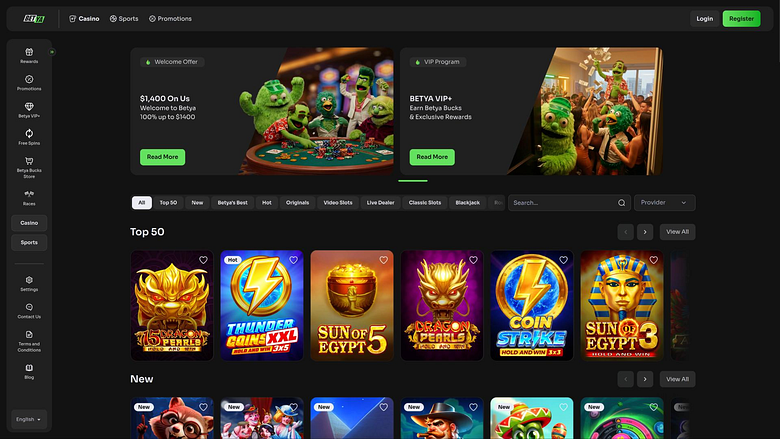
Account settings can shape an online casino experience more than the size of its lobby. Before creating expectations around a promotion, review how access, verification, currency, limits and support are handled. The betya casino no deposit information should therefore be read as a starting point, not as proof that every offer or account feature is available to every Canadian player. A careful settings check helps you understand what can be changed, what may require support and what becomes difficult to reverse.
Start by separating account access from account activity
The platform uses one account for casino and sportsbook activity, with the same credentials available on desktop and mobile browsers. That arrangement may be convenient, but it also means that an access problem can affect more than one type of activity. A forgotten password, an unconfirmed email address or a missing verification document may interrupt access across the shared account rather than only one section.
Password recovery is described as beginning from the login screen, using the registered email address. If that route does not resolve an issue, support is listed as an alternative through email or live chat. Keep the registered email current and avoid relying on a browser’s saved password if other people can access the device. Never share login credentials with a friend or allow another person to fund the account, since third-party funding is not permitted.
It is also useful to distinguish a technical lock from a deliberate restriction. The account states described in the available material include active, under review, locked, restricted, suspended, dormant, closed and self-excluded. Missing documents can lead to a temporary lock, while inactivity lasting 180 days is associated with an inactive-balance restoration process. Before contacting support, note the exact message shown, the time access stopped and whether any verification request is outstanding.
Choose currency and language with future changes in mind
Canadian-dollar accounts are identified among the available currency options, alongside several other fiat currencies and cryptocurrencies. Selecting a currency is not merely a display preference. It can affect how deposits, withdrawals, balances and exchange-rate movements appear. The material does not establish that every currency is offered to every Canadian account, so the available choices shown during account setup or in account settings should be treated as controlling.
Changing currency later may not be as simple as editing a profile field. Operators commonly need to protect transaction records, bonus calculations and payment reconciliation, so a currency change can require support or a new account decision. Before choosing, consider the currency of your usual payment method and whether you want to avoid unnecessary conversion. With digital assets, also check the exact asset and network shown in the cashier before sending funds.
The interface is described as available in English and French. That is useful for navigation, but translated menus do not replace reading the terms attached to an offer or account restriction. Keep copies of important confirmations, including selected currency, promotional acceptance and any limit request. If a setting is unclear, ask support to explain whether it applies to the casino only, the sportsbook as well or the shared wallet.
Make verification part of your account plan
Identity checks are normally expected before a first withdrawal, although a review may also be triggered by transaction size or account activity. Potential documents include government-issued photo identification, proof of address issued within the previous three months and evidence that the payment method belongs to you. This means verification is not just a final cash-out step; it can influence how smoothly the account operates beforehand.
Use the account’s KYC area or the support route identified by the operator, and submit documents only through the stated channel. For a payment card copy, the available guidance says that only the first six and last four digits should remain visible. The unneeded middle digits and security code should not be exposed. Keep a record of what was sent and when, but do not email sensitive documents to an unverified address.
Canadian players should also check the rules that apply in their province rather than assuming that a general website description settles availability or legal age. The Centre for Addiction and Mental Health’s problem gambling information provides broader public-health context, but it does not confirm any operator’s specific account terms. Treat identity review as a practical condition of account management, not as evidence that every feature or promotion is available.
Set limits before a promotion makes the decision
The account controls described in the source material include daily, weekly and monthly deposit limits, cooling-off periods, temporary time-outs and self-exclusion. Some reviews also mention wager and loss limits, as well as a self-assessment tool. These settings serve different purposes: a deposit limit controls funding, a loss limit addresses net losses, and a time-out interrupts access for a defined period.
Choose a limit based on a fixed entertainment budget rather than on a bonus requirement. A promotion can make a larger deposit appear attractive, but accepting an offer may introduce wagering conditions, expiry dates or maximum-stake rules. The available terms describe different requirements for different promotions, so no-deposit wording should not be treated as proof that there is no play-through condition or withdrawal restriction.
Self-exclusion is stronger than a short break. The available material says it can be requested for a specified or indefinite period and blocks play during the selected period; reopening is not immediate. If you need a restriction to remain firm, do not treat support as a shortcut around it. For concerns about gambling, consider speaking with a qualified service or health professional rather than trying to solve the issue through account settings alone.
Use support records to resolve settings disputes
Support is described as available through live chat and support email, with assistance advertised around the clock. For an account question, write a short, precise message that identifies the setting involved, the date of the request and the result you expected. Avoid sending passwords or complete card details. Screenshots can help explain a technical error, but remove unrelated personal information before sharing them.
Formal complaints are described as being submitted in writing. The stated process includes acknowledgement within 48 hours and a target response within ten business days, with responsible-gambling matters prioritised. Those are described service targets, not a guarantee that every issue will be resolved within that time. Save the original message, any case number, the response and the relevant account notices in one folder.
When a setting affects money or access, ask for the answer in concrete terms. For example, confirm whether a requested limit applies immediately, whether it covers both casino and sportsbook activity, and whether an active promotion is affected. If the published information does not answer the question, rely on the operator’s written clarification instead of assuming that a menu label or promotional description tells the whole story.
Frequently asked questions about account settings
Can one login control both casino and sportsbook activity?
Yes, the available material describes one real-money account with shared credentials and a shared wallet for casino and sportsbook use. That convenience also means an account review, lock or password problem may affect both areas. Check with support if you need to know whether a particular limit or restriction applies across the full account.
What should I do if verification blocks an account?
Review the requested document list, ensure identification is current and provide files through the stated KYC area or verified support channel. Keep sensitive card details masked as instructed. If the reason remains unclear, ask support which document is missing and whether the account is under review, temporarily locked or otherwise restricted.
Is a cooling-off period the same as self-exclusion?
No. A cooling-off period is generally a temporary pause, while self-exclusion is a stronger account restriction for a specified or indefinite period. The available material says self-exclusion blocks play and reopening is not immediate. Select the setting that matches the seriousness and duration of the break you need.